
Brown County Arrest Warrants Explained
In Texas, an arrest warrant is a written order from a magistrate telling a peace officer to arrest someone and bring them before the proper authority. A sworn complaint or affidavit and probable cause support it. Felony matters in Brown County can route through the 35th Judicial District Court, the District Clerk, the magistrate, and the sheriff. Fine-only cases often begin in a JP or municipal court. The warrant type and issuing court matter. A bench-type FTA entry is not automatically a new charge.
Brown County Probable-Cause Arrest Warrants
For justice and municipal cases, Chapter 45A describes a sworn complaint and affidavit built on probable cause, while Texas Code of Criminal Procedure Chapter 15 sets the general arrest-warrant requirements. The affidavit gives the magistrate facts to weigh. Ask the issuing clerk which complaint, cause number, and court go with the process. Code of Criminal Procedure Chapter 15 spells out the arrest and magistration rules. Only the court's current file can answer a specific Brown County status.
Inside a Brown County Arrest Warrant
Brown County posts no standard public format for warrant entries. If a clerk confirms a record, ask for its identifier and the details that explain its status. Some fields stay withheld or redacted, especially in sealed, juvenile, or active-investigation material.
| Cause or warrant number | Identifier used by the issuing court; no shared county format was located. |
|---|---|
| Charge | Offense and classification tied to the complaint. |
| Issuing authority | Magistrate or court that authorized the process. |
| Issue and return | Date issued and service or return entry, when available. |
| Bond and status | Ask whether a bond is set and if the order is active, served, recalled, or quashed. |
Brown County 35th District Arrest Warrants
The 35th District Court is Brown County's felony trial court. Judge Mike Smith sits there, and its criminal docket route runs from the courthouse at 200 S Broadway, Suite 212. The District Clerk, Cheryl Jones, works from Suite 216 at 325-646-5514. The court's own number is 325-646-1987. The 35th District Court page lists those contacts and docket details, but it is no warrant roster.
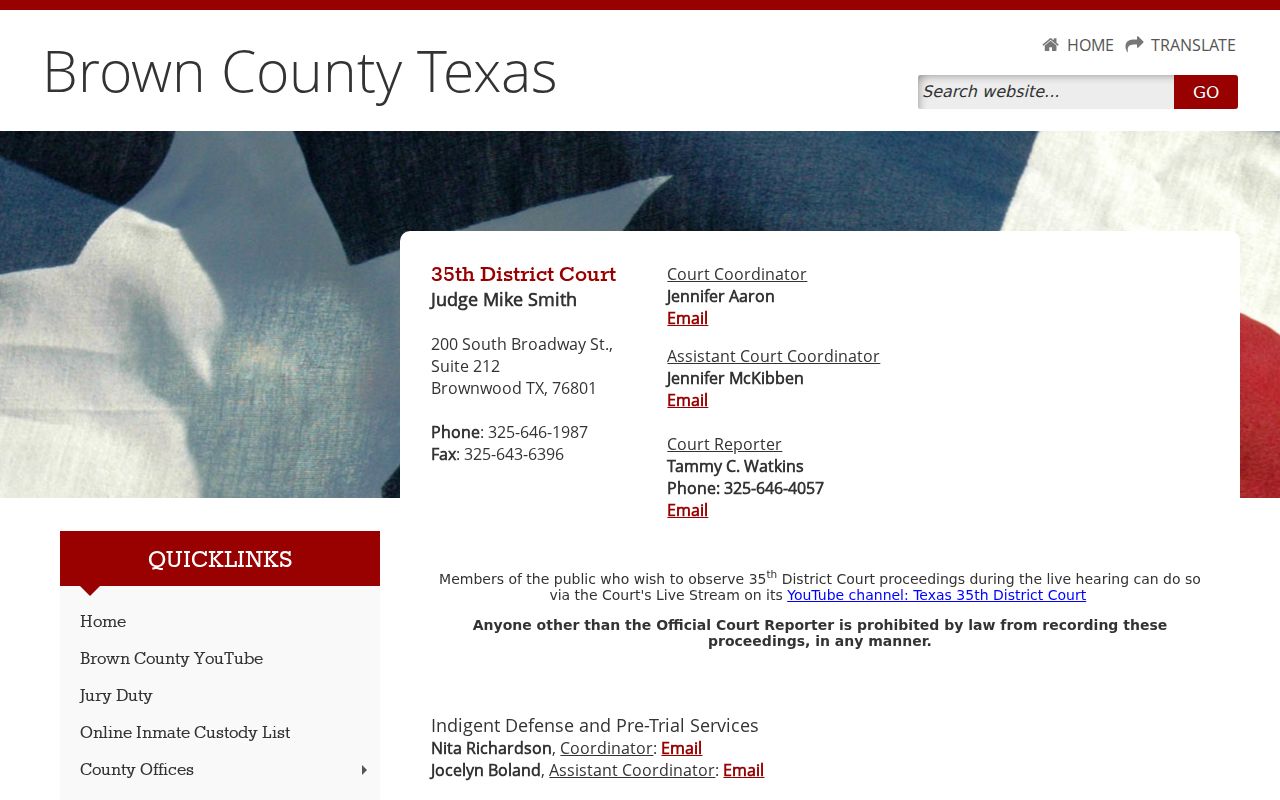
Confirm current clerk and coordinator routing before travel.
Serving Arrest Warrants in Brown County
The sheriff, constables, city police, and a municipal marshal each keep separate public contacts. Brown County does not publish which constable serves a given criminal warrant. State law lets a city officer or marshal serve municipal process, but confirm the assigned officer with the court.
| Office | Public contact | Local note |
|---|---|---|
| Brown County Sheriff | 1050 W Commerce, 325-646-5510 | County law enforcement and jail records |
| Constable Precincts 1-4 | Courthouse Suite 200 | Separate phones; assignment chart not published |
| Brownwood Police / marshal | 1050 W Commerce | Municipal process and city policing |
| Early / Bangs Police | City court addresses | Confirm service with issuing court |
Brown County County-Court Arrest Warrants
The County Court at Law runs its own criminal docket at 200 S Broadway, Room 208. Its listed phone is 325-646-5859. The court page posts docket links rather than a countywide arrest-warrant index. Ask the coordinator or clerk about current case status and whether a separate District Clerk file exists. The County Court at Law page gives the contact and docket route, not private warrant records.
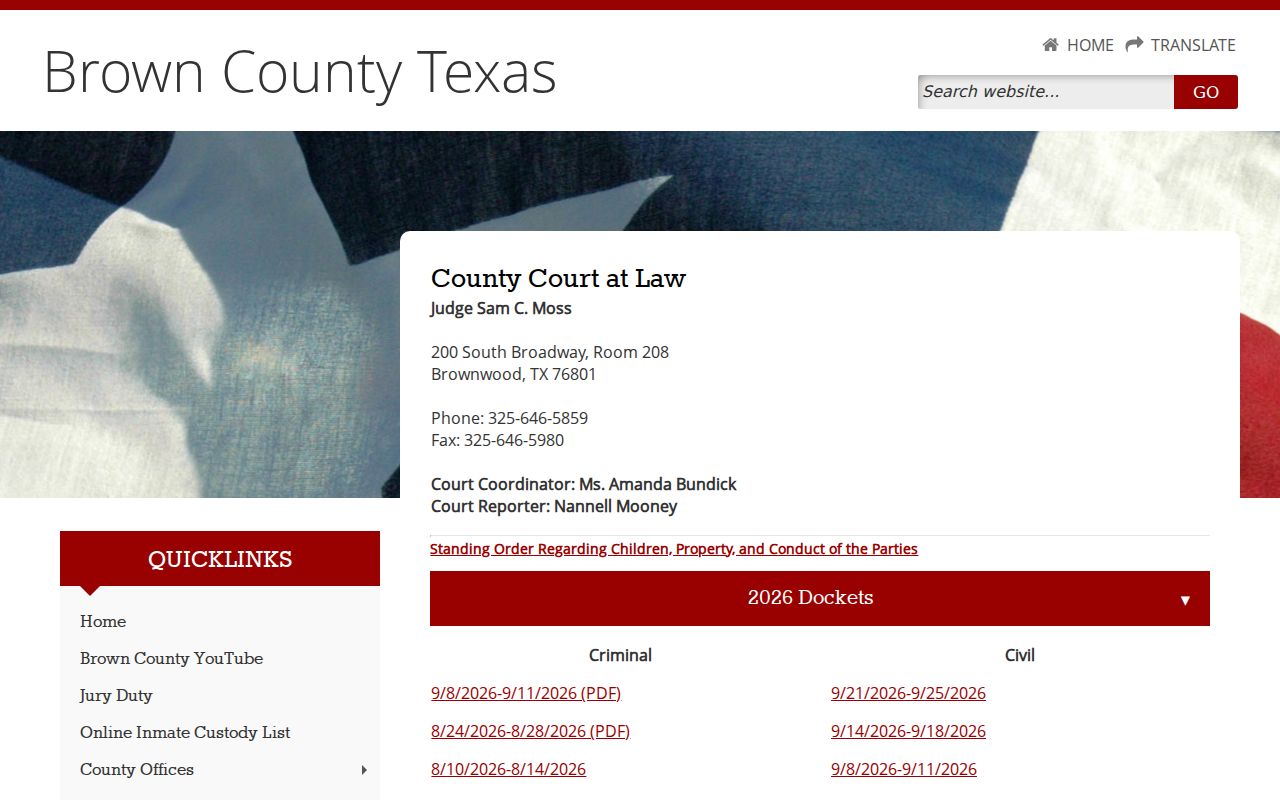
Check the current office information before calling or traveling.
Brown County Arrest and Bench Warrants
A summons tells a person to appear. An arrest warrant tells an officer to take someone into custody. A bench or FTA warrant usually follows a missed court duty. A capias orders a person brought to court, and a capias pro fine follows a fine-only judgment. Ask the clerk which instrument applies and where the case stands.
| Process | Why it is used | First question |
|---|---|---|
| Summons | Notice to appear | What date and court are listed? |
| Arrest warrant | Probable-cause arrest process | Which complaint and magistrate? |
| Bench warrant | Missed setting or court order | Which obligation was missed? |
Brown County Federal Warrants Reach San Angelo
Federal cases run through the Northern District of Texas, San Angelo Division, not the state-court chain. Brown County sits inside that division. The federal clerk and the U.S. Marshals Service are separate from the Brown County Sheriff. No local public warrant list answers a federal question. The U.S. Marshals Northern District locations page identifies the San Angelo office.
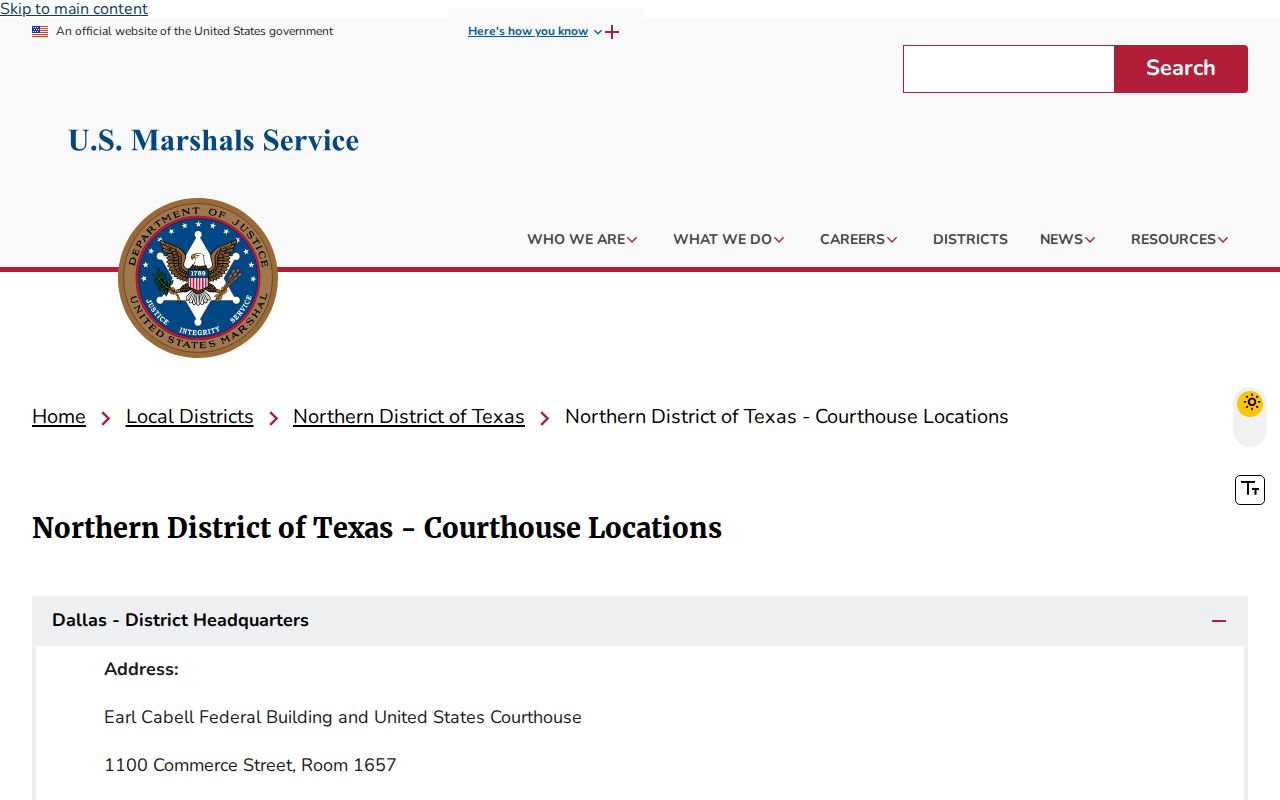
Call ahead to confirm which federal office now handles the matter before trusting any Brown County listing. PACER access fees are posted on the court's pricing page, and sealed case materials stay hidden from view.
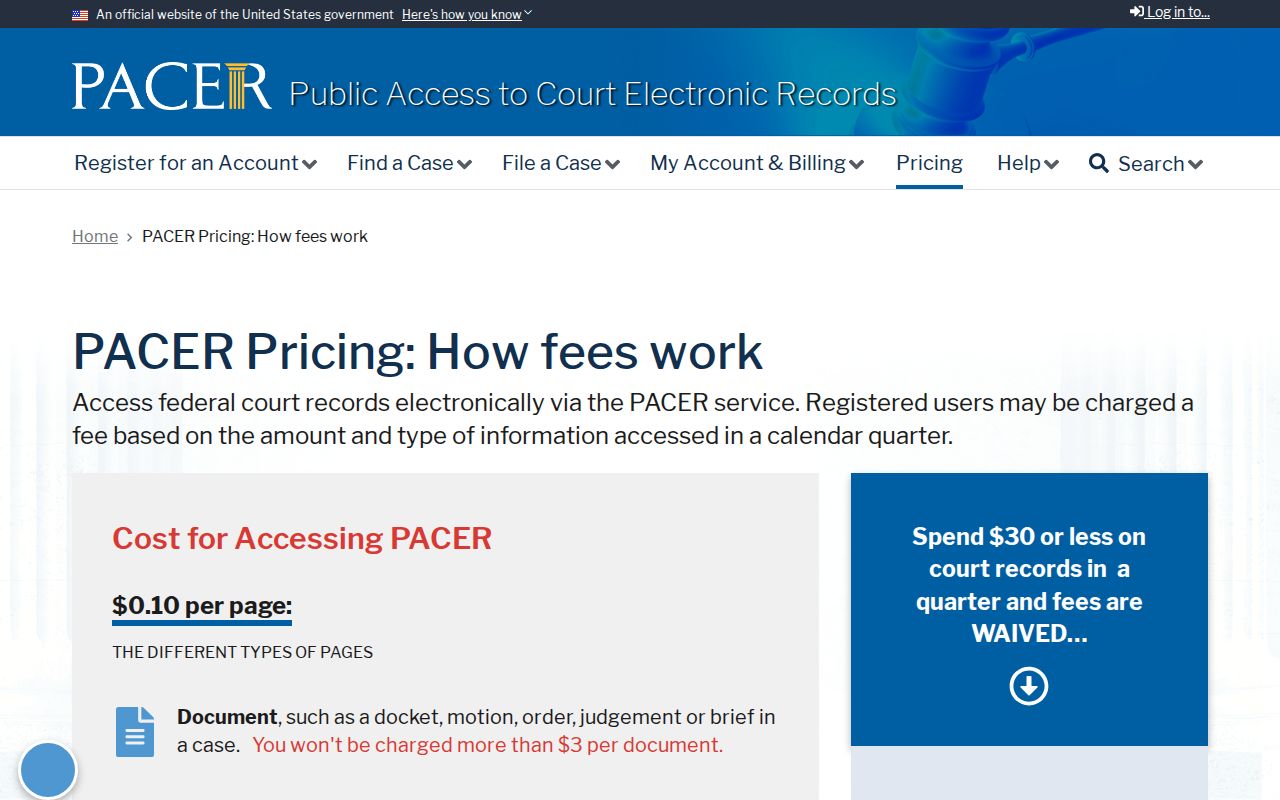
PACER is a docket tool, not a complete federal warrant search.
Brown County Arrest Warrant Bond Amounts
Brown County publishes no bond schedule, warrant-specific bond amount, bond-window hours, or accepted payment method. Statutory warrant-processing fees are court costs, not bond principal. Never infer a bond from a fine balance, and never pay an unverified caller. Ask the issuing clerk about cash, surety, attorney, or personal-recognizance release, the next court date, and whether counsel should arrange the appearance. After an arrest, Texas law requires presentation to a magistrate without unnecessary delay and no later than 48 hours.
If You Have a Brown County Arrest Warrant
Call the issuing clerk or a licensed Texas attorney before appearing. Ask whether the court will allow a voluntary appearance, walk-through, bond, or motion to recall. Brown County's public pages promise no safe-surrender window. If arrested, ask when magistration and bond review happen; the legal deadline does not guarantee a release hour.
Before you travel: Confirm the court, location, and required step with counsel or the issuing office. Request written confirmation when the court changes the record.
The Brown County warrant records home sorts out which local office answers for each kind of county warrant.
Brown County Arrest Record Access
Article 15.26 lets the public inspect an arrest warrant and its affidavit once a magistrate has them. Some limits still apply. Search-warrant rules, sealed process, juvenile confidentiality, and law-enforcement exceptions can keep a record closed, so ask for the exact authority if an office withholds one. The Texas Judiciary access policy sums up the public rule. In Brown County, the sheriff also takes written requests at sheriff.records@browncountytx.gov, and the clerk can say what copy or redaction is available.